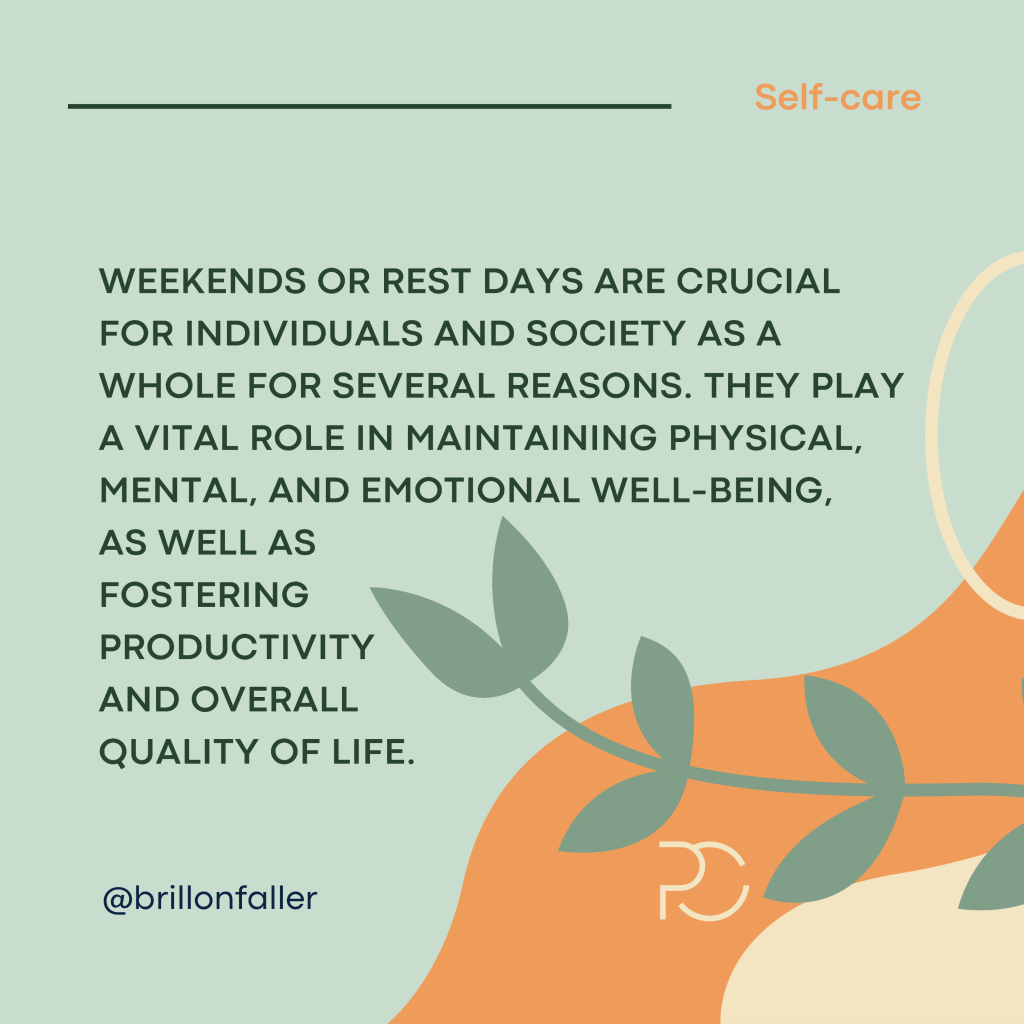
Weekends or rest days are crucial for individuals and society as a whole for several reasons. They play a vital role in maintaining physical, mental, and emotional well-being, as well as fostering productivity and overall quality of life.
Here are some of the key importance of weekends or rest days:
Physical and Mental Recovery: Work, study, and daily responsibilities can be physically and mentally taxing. Weekends provide a valuable opportunity for the body and mind to rest, recharge, and recover from the demands of the week. Adequate rest helps prevent burnout, reduces stress, and improves overall health.

Let’s delve deeper into each aspect.
I. PHYSICAL RECOVERY
A. Muscle Repair and Rejuvenation: Many jobs and daily activities involve repetitive movements or staying in the same position for extended periods. This can lead to muscle fatigue and strain. During weekends, individuals have the opportunity to engage in different physical activities or simply rest, allowing the muscles to recover and repair.
B. Reduced Risk of Overuse Injuries: Continuously using certain muscle groups without proper rest can lead to overuse injuries, such as tendonitis or stress fractures. By taking time off during weekends, people give their bodies a chance to heal and prevent such injuries.
C. Improved Sleep Quality: Quality sleep is essential for physical recovery. During the workweek, stress and busy schedules can disrupt sleep patterns. On weekends, individuals can catch up on sleep, avoid early alarms, and establish a more consistent sleep routine, which benefits overall health and energy levels.
D. Relaxation of Joints: Joints also benefit from rest days. Daily activities can put stress on joints, and a break on weekends helps reduce inflammation and discomfort.
E. Enhanced Immune System: Chronic stress, inadequate sleep, and physical fatigue weaken the immune system. Rest days allow the body to recover and strengthen its defense mechanisms, helping to ward off illnesses.
II. MENTAL RECOVERY
A. Reduction of Cognitive Fatigue: Continuous mental engagement, decision-making, and problem-solving at work or during studies can lead to cognitive fatigue. Weekends provide a mental break, allowing the brain to recharge and regain focus.
B. Stress Reduction: Work-related stress and responsibilities can accumulate throughout the week. Weekends offer an opportunity to step away from those stressors, which has a positive impact on mental health and helps prevent burnout.
C. Enhanced Mood and Emotional Resilience: Taking time off can lead to improved mood and emotional well-being. Engaging in enjoyable activities and spending time with loved ones during weekends can increase feelings of happiness and strengthen emotional resilience.
D. Space for Reflection and Self-Care: Weekends allow individuals to engage in self-care practices, such as meditation, journaling, or spending time in nature. These activities foster self-awareness and emotional balance.
E. Brain Plasticity and Learning: The brain benefits from periods of rest, allowing it to consolidate information and improve memory retention. Taking breaks on weekends can enhance learning and retention, making it easier to absorb new knowledge when returning to work or studies.
F. Enhanced Creativity and Problem-Solving: Stepping away from work-related tasks can stimulate creativity and lead to better problem-solving abilities. The brain can make new connections and generate fresh ideas during restful periods.
G. Improved Focus and Concentration: When the mind is well-rested, focus and concentration improve. This heightened focus can lead to increased productivity when individuals return to their tasks after a weekend of mental recovery.
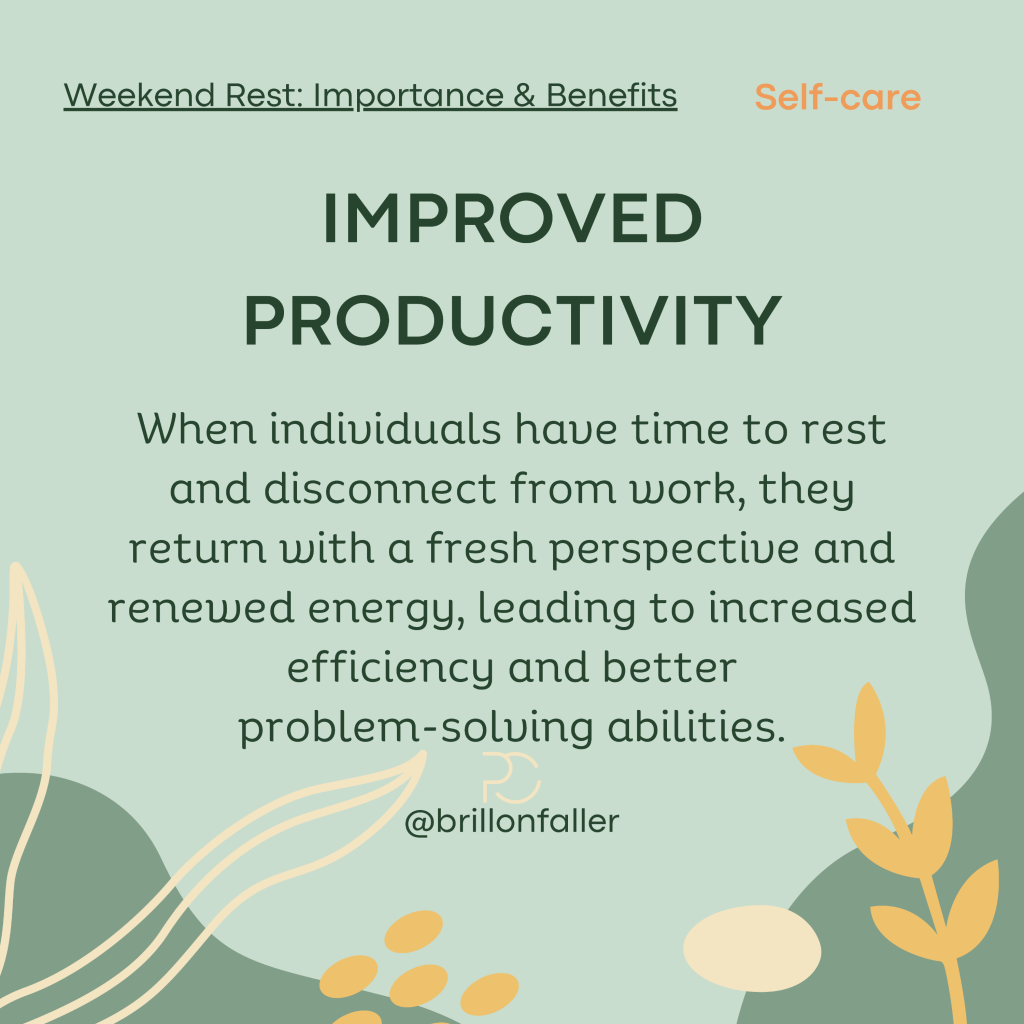
Improved Productivity: Contrary to the belief that taking time off reduces productivity, regular breaks are essential for maintaining high levels of performance and achieving long-term success. Weekends and rest days are not merely breaks from work or study; they are strategic tools for maintaining and enhancing productivity. By promoting well-being, creativity, renewed focus, and the prevention of burnout, weekends contribute significantly to overall performance and success in both professional and personal endeavors.

Work-Life Balance: Achieving a healthy work-life balance is essential for overall well-being. People have personal responsibilities, relationships, and interests outside of work or study. Weekends create a clear boundary between professional or academic life and personal life, allowing individuals to focus on other aspects of their identity and find fulfillment beyond their work or studies.
Enhanced creativity is one of the many benefits of having weekends or rest days. Creativity refers to the ability to generate novel ideas, solutions, or original works. It is not limited to artistic pursuits but is essential in various aspects of life, including problem-solving, innovation, and critical thinking. Weekends play a crucial role in stimulating and enhancing creativity through several mechanisms:
A. Unstructured Time: Weekends provide unstructured and leisurely time, allowing the mind to wander and explore without the constraints of daily routines or work-related tasks. During this free time, individuals can engage in activities they enjoy, whether it’s pursuing hobbies, reading, spending time in nature, or simply daydreaming. Unstructured time nurtures the creative process by giving the mind space to make new connections and think beyond the immediate constraints of daily life.
B. Reduced Cognitive Load: Continuous work or study can create a cognitive load, where the brain becomes preoccupied with the demands of tasks and responsibilities. Weekends offer a mental respite, reducing this cognitive load and freeing up mental capacity for more creative thinking. A relaxed mind is more open to new ideas and unconventional approaches to problems.
C. Inspiration from Diverse Activities: Weekends provide opportunities for exposure to diverse activities and experiences. Engaging in new or different activities, visiting new places, meeting people, or trying out hobbies can be a rich source of inspiration. These experiences can provide fresh perspectives and ideas that may not have emerged during the daily work or study routine.
D. Mindfulness and Reflection: Taking time off during weekends can lead to moments of mindfulness and self-reflection. These moments allow individuals to gain insights into their thoughts, feelings, and aspirations. This self-awareness can spark creative ideas and lead to a deeper understanding of personal values and interests, contributing to more meaningful and authentic creative expression.
E. Playfulness and Experimentation: Weekends often encourage a sense of playfulness and experimentation. Whether through creative arts, crafts, or trying out new hobbies, individuals are more inclined to take risks and explore without fear of judgment or failure. This sense of freedom fosters creative thinking and allows for unconventional approaches to problem-solving.
F. Mind-Wandering and Incubation: Mind-wandering, or letting the mind wander without a specific focus, is an important part of the creative process. During weekends, individuals have the luxury of time to let their thoughts roam freely. This mental incubation period can lead to “aha” moments and breakthroughs as the brain processes information and makes new connections.
G. Restoring Mental Energy: Creativity often thrives when the mind is well-rested and recharged. Weekends offer an opportunity to rest and replenish mental energy, enabling individuals to approach challenges with a fresh perspective and renewed vigor when they return to work or studies.
H. Community and Collaboration: Weekends may involve participating in community events, workshops, or collaborative creative endeavors. Interacting with others who share similar interests can spark new ideas and provide valuable feedback, inspiring further creative exploration.
In conclusion, weekends and rest days are conducive to enhanced creativity through the fostering of unstructured time, reduced cognitive load, exposure to diverse experiences, mindfulness, playfulness, and collaboration. By nurturing the creative process, weekends contribute to personal growth, problem-solving abilities, and innovative thinking, enriching both personal and professional aspects of life.

Stronger Relationships: Meaningful relationships are vital for emotional and psychological health. Weekends provide opportunities to spend quality time with family and friends, building deeper connections and creating cherished memories. Nurturing relationships outside of work or study contributes to a more fulfilling and satisfying life.
Personal Growth: Weekends offer a chance for self-improvement and personal development. People can use this time to read books, take online courses, develop new skills, or engage in hobbies they are passionate about. This continuous learning and growth contribute to a sense of accomplishment and a deeper understanding of oneself.
Promoting Health and Wellness: Physical health is crucial for overall well-being. Weekends allow individuals to engage in physical activities like exercise, sports, or outdoor recreation, which can have a positive impact on cardiovascular health, weight management, and mental well-being. Additionally, having the time to prepare and enjoy nutritious meals during weekends can promote healthier eating habits.
Reduced Stress and Anxiety: Continuous work or study without breaks can lead to chronic stress and anxiety. Stress is linked to various health issues, including cardiovascular problems, weakened immune systems, and mental health disorders. Weekends offer an opportunity to disconnect from work-related pressures, reducing stress levels and promoting relaxation.
Better Sleep Habits: During the workweek, many people have to wake up early and adhere to a strict schedule, which can disrupt natural sleep patterns. Weekends provide a chance to catch up on sleep and establish healthier sleep routines. Adequate sleep is vital for cognitive function, emotional well-being, and physical health.
Boosting economic activity through weekends or rest days involves the positive impact these breaks have on consumer spending, various industries, and overall economic growth.
How weekends contribute to economic activity:
A. Increased Consumer Spending: Weekends are typically when people have more free time and are more likely to engage in leisure activities and shopping. Retailers, restaurants, entertainment venues, and other businesses often experience a surge in foot traffic and sales during weekends. This increased consumer spending bolsters the revenue of these businesses and contributes to the local and national economy.
B. Hospitality and Tourism: Weekends are prime times for tourism and travel. Many individuals take short trips, visit tourist attractions, or participate in recreational activities during weekends and holidays. The hospitality industry, including hotels, restaurants, tour operators, and transportation services, benefits significantly from this increased demand during weekends, creating jobs and revenue in the process.
C. Entertainment and Events: The weekend is a popular time for concerts, sports events, festivals, and other entertainment activities. These events attract large crowds, generating revenue for event organizers, local businesses, and the host city. Moreover, the revenue from ticket sales and associated spending boosts economic activity.
D. Restaurants and Food Services: Weekends are an opportunity for people to dine out, try new restaurants, or socialize with friends and family over meals. Restaurants, cafes, and food services see a surge in customers during weekends, leading to increased sales and employment in the food industry.
E. Retail and E-commerce: Many consumers use weekends to shop for various goods, both in physical stores and online. The convenience of online shopping has made weekends a prime time for e-commerce sales. The retail sector benefits from this increased consumer activity, contributing to economic growth.
F. Recreation and Sports: Weekends are when people engage in recreational activities, sports, and fitness pursuits. This includes visiting gyms, participating in outdoor sports, and purchasing sports equipment. These activities support industries related to fitness and sports, leading to economic gains.
G. Transportation: Weekend travel and outings contribute to increased demand for transportation services. This includes not only public transportation but also rental cars, ride-sharing services, and airline travel. Transportation companies experience higher revenue during weekends due to increased passenger numbers.
H. Health and Wellness Services: Some individuals use weekends to engage in health and wellness activities, such as spa visits, massages, or wellness retreats. These services are part of the growing health and wellness industry, which contributes to economic activity.
I. Community Events and Festivals: Many communities organize events and festivals during weekends to attract visitors and promote local businesses. These events boost tourism and spending within the community, benefiting local economies.
J. Impact on Employment: Increased economic activity during weekends often leads to the creation of part-time or temporary jobs to meet the demand for services and products. This, in turn, contributes to lowering unemployment rates and supporting the workforce.
Weekends and rest days play a crucial role in boosting economic activity by stimulating consumer spending, supporting industries like hospitality, tourism, entertainment, retail, transportation, and health services. Additionally, the social and recreational activities that people engage in during weekends contribute to economic growth and job creation, making weekends a vital component of a thriving economy.
Environmental Benefits: Some individuals use weekends to engage in environmentally friendly practices. They may participate in community cleanups, support local farmers’ markets, adopt sustainable living habits, or spend time in nature, raising awareness about environmental issues and contributing positively to the planet.
In summary, weekends and rest days are not just about taking time off; they are a fundamental aspect of maintaining a healthy, balanced, and fulfilling life. By providing opportunities for relaxation, personal growth, and meaningful connections, weekends contribute to the overall well-being of individuals and communities.

 Nurtured Hearts Hub 💚
Leave a comment